Crazy Time Live Casino Game Show in the UK
 Available in GB
Explore how Crazy Time is presented in live casinos, what operator licensing means and how the game differs from slots and table games.
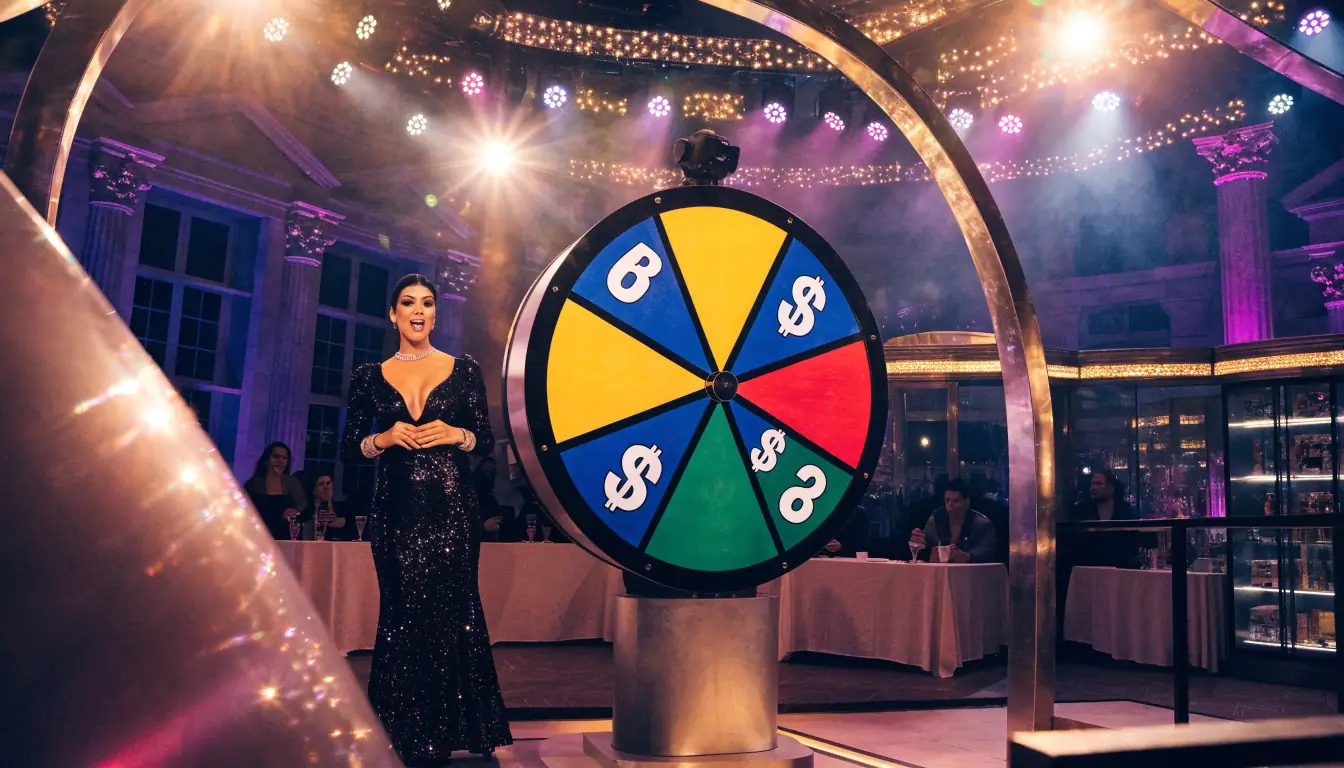
Table of Contents
- How Crazy Time Fits Into the UK Live Casino
- Live Casino Games and Providers in the UK
- Checking UK Casino Sites Before Playing
- Finding Crazy Time at an Online Casino
- Assessing Casino Options for Crazy Time
- Crazy Time Play and the Limits of Strategy
- Free Play and Crazy Time Demos
- Bonuses, Deposits and Payment Restrictions
- Crazy Time Rules and the Difference Between Slots and Table Games
How Crazy Time Fits Into the UK Live Casino
Crazy Time is the subject of this guide as a live-casino game-show title. Its place in the UK market is shaped not only by the way it is presented, but also by the rules that govern commercial gambling. The relevant starting point is the distinction between a game’s availability and the legal status of the operator offering it.
In Great Britain, the UK Gambling Commission is the regulator for commercial gambling. Its remit covers remote gambling offered to consumers there, even when the operator’s key equipment is located elsewhere. An operator cannot avoid the licensing requirement simply by hosting its systems outside the country: businesses providing remote gambling to Great Britain consumers must hold the relevant Gambling Commission licence.
The Commission also has a broader role in the United Kingdom’s gambling landscape, including online casinos. Its licensing system applies to both organisations and people in the industry: operating licences are issued to businesses, while personal licences cover individuals undertaking specified work in gambling. These are distinct forms of authorisation, rather than interchangeable credentials.
This framework matters when considering any Crazy Time casino serving the British market. The title itself does not determine whether an offer is regulated. That depends on the operator and the market it serves. A site’s presentation, the presence of a live game, or an apparent connection to a casino brand does not in itself establish that the business has permission to offer remote gambling in Great Britain.
The territorial scope also requires care. Great Britain refers to England, Scotland and Wales; Northern Ireland is governed separately under the Gambling Act framework. As a result, statements about the Commission’s requirements for operators serving Great Britain should not automatically be extended to every part of the UK. The Commission’s national role and the boundaries of particular licensing rules are related, but they are not identical.
For a UK-focused account of Crazy Time live casino activity, the practical implication is that regulation is an operator-level question. A game may be discussed as part of the live-casino sector, while the legal status of a particular offer depends on whether the business providing it holds the appropriate authorisation. The Commission’s remit is not limited by where the operator keeps its equipment, so the location of a website or studio alone does not resolve that question.
Online Casino Games for Real Cash in the UK
Online gambling is for adults aged eighteen and over where the operator holds the required UK Gambling Commission licence. Age checks are part of the regulated environment: operators must verify a customer’s age before allowing funds to be deposited into a gambling account. These safeguards sit alongside licensing, rather than replacing it.
The regulatory context does not establish anything about the quality or suitability of an individual game. It defines the conditions under which commercial remote gambling may be offered to consumers in Great Britain. Gambling should be limited to money that can be afforded to lose.
Best casino sites in the UK
- EvoSpinBonus: 125% up to €2500 + 125 Free Spins · Payout speed: 1-3 business days
- WinBeastBonus: €5000 + 500 FS + €650 Freebet · Payout speed: 1-3 business days
- JetsetspinsBonus: 200% Bonus + 100 Free Spins + Free Royal Wheel · Payout speed: 1-3 business days
- ZombillionBonus: Welcome Pack 250% up to £4000 + 200 FS · Payout speed: 1-3 business days
- NightLuckBonus: Welcome Pack + 805% Up To 6400€ + 280 FS · Payout speed: 1-3 business days
- AmunbetBonus: Join now and get 450% up to 2,700 GBP + 450 FS · Payout speed: 1-3 business days
- SlotoSportBonus: 500% up to £ 10 200+ 777 FS · Payout speed: 1-3 business days
- SpinFormulaBonus: 550% Up To £15,000 + 550 FS · Payout speed: 1-3 business days
- Revery PlayBonus: 100% up to€1,000+ 100 FS · Payout speed: 1-3 business days
Live Casino Games and Providers in the UK
Crazy Time sits within a live-casino category that includes several kinds of games, rather than a catalogue made up solely of one format. Card games and roulette are established parts of that broader offering. Live game shows add another kind of title to the mix, giving the category a different presentation from conventional table games. The range matters because a casino’s live section can contain products with distinct formats and audiences, even when they share a live interface.
The name “live casino” describes a broad product area, not a single set of rules or a uniform style of play. A casino may group games by format, provider or other catalogue labels, and titles within the same section can differ substantially. Crazy Time is therefore best understood in context: as one recognisable game-show title within a wider live-casino environment that also includes card and roulette products. That context does not, by itself, establish how any individual title works.
The variety is visible in the history of Grosvenor’s online offering. Grosvenor introduced its live casino games in 2013, with a range that included Blackjack, Texas Hold’em and Roulette. Those examples show that live casino has encompassed familiar card games as well as roulette, rather than being limited to newer game-show formats. They also provide a concrete point of comparison for understanding how the category has developed: a live-casino catalogue can bring together different established game types under one broad label.
Established parts of the live-casino offering, including titles like Blackjack and Texas Hold’em.
A conventional table game and a core component of live-casino catalogues.
Titles with a different presentation from table games, including Crazy Time.
Providers are part of this landscape because they develop or supply games that operators may include in their catalogues. Evolution, Eyecon and NetEnt are examples of providers in the sector. Their presence as providers should not be read as evidence that each supplies every game, or that a particular title is available through every casino. A game’s provider, its format and the operator carrying it are separate details. Keeping those distinctions clear avoids treating a broad provider name as a guarantee about a specific product or site.
For someone considering Crazy Time at an online casino in the UK, the surrounding catalogue can help describe the kind of live-casino section in which it appears. It does not establish that the game is offered by every operator, nor does it make one catalogue equivalent to another. A site may present live titles alongside table games, while another may organise its products differently. The wider context is useful for recognising the category, but it should not be confused with a comparison of operators or an assurance of access.
The distinction between game types also matters when interpreting labels. Blackjack, Texas Hold’em and roulette are examples of the card and casino games in Grosvenor’s launch range; Crazy Time belongs to the game-show side of the wider live-casino conversation. These labels describe broad formats, not a complete account of a title’s rules. A name or category heading alone cannot show the details of a game’s rounds, outcomes or conditions. Those belong to the individual product information.
Deal or No Deal Casino UK: Slots and Free Play
The UK live-casino market is consequently better viewed as a collection of catalogues and formats than as one standardised bundle. Operators choose which products to display, while providers contribute games to the wider ecosystem. Grosvenor’s 2013 launch offers a documented example of a live range combining Blackjack, Texas Hold’em and Roulette. Against that background, Crazy Time can be placed within the broader category without assuming that it shares the structure of those games or appears in every live casino. Any gambling should remain within what can be afforded to lose.
Checking UK Casino Sites Before Playing
A casino listing or search result is not evidence that an operator is authorised to serve customers in Great Britain. The relevant check is the operator’s status on the UK Gambling Commission’s public register. The Commission requires remote gambling operators serving Great Britain consumers to hold the appropriate licence, so a site’s own claims, branding or references to regulation should be checked against the register rather than treated as proof.
The register is useful because the name shown to customers may differ from the legal name of the business holding the licence. A careful check therefore compares the operator’s stated company identity and website domain with the register entry, and confirms that the licence covers remote casino activity. A licence held by a similarly named business is not, by itself, evidence that the site being considered is covered. Where the relationship between a brand, domain and licence holder is unclear, the available information does not justify assuming that they are the same entity.
- Compare the operator’s stated identity and domain with the public register.
- Confirm that the licence covers remote casino activity.
- Check the current register entry before making a deposit.
- Treat a site’s own claims or branding as proof of authorisation.
- Assume a similarly named business holds the required licence.
- Rely on a logo or footer statement as a substitute for the register.
This approach matters when looking for casinos offering Crazy Time. A game catalogue can establish that a particular title is displayed, but it cannot establish that the casino is authorised to provide real-money gambling in Great Britain. Conversely, a register entry does not prove that the operator currently offers that specific game. Licence status and game availability are separate questions, and each needs its own evidence.
A dated example illustrates why claims about individual brands need careful qualification. An affiliate review reports that the Gambling Commission’s public register, dated 26 September 2026, did not identify a LuckyPays entry under that brand or the stated domain, including luckypays.io. That report is a time-specific account of a register check, not a general finding about casino sites and not a substitute for checking the register directly. Register information can change, and the result should not be extended beyond the brand, domain and date described. It also does not establish what other services or sites may use a similar name.
For any operator, the strongest assessment is based on the current register entry and the precise site being considered. If the licence number is displayed, it should be checked against the public record before a deposit is made. The number alone is not enough: it must correspond to the relevant operator, and the record must support the activity being offered. A logo, badge or footer statement can be copied or become outdated; it does not replace confirmation in the Commission’s register.
Crash Casino Games in the UK: Rules and Access
There are limits to what a register check can establish. It can help determine whether a named business holds a relevant licence, but it does not rank casinos, assess the quality of their service or guarantee that every game shown in an advert is available to every customer. Nor does a single review’s description of a past lookup establish the present position of a brand. Claims about Crazy Time casinos in the UK therefore need to be separated into verifiable points: which legal entity operates the site, whether its licence covers the relevant remote gambling, and whether the game is actually listed by that operator.
The regulatory check is also distinct from a player’s assessment of whether gambling is suitable. A licence does not remove the possibility of losing money. Gambling should be limited to money that can be afforded to lose, and a casino’s claims about access to a live game should not be treated as a promise of a particular outcome or return. The relevant conclusion from a licence check is narrow: it provides evidence about regulatory authorisation, not a recommendation to play.
A cautious review of a casino site consequently avoids relying on lists that label brands as “UK” options without showing how that status was established. The public register provides a more direct basis for checking authorisation, while the operator’s own game catalogue can be considered separately for Crazy Time availability. Where a brand or domain cannot be matched clearly to a relevant register entry, the evidence is insufficient to describe it as a licensed Great Britain casino.
Gambling should be limited to money that can be afforded to lose.
Finding Crazy Time at an Online Casino
Crazy Time may be listed within an online casino’s live-casino area, but its exact position depends on the operator’s interface. A games menu may separate live titles from slots and other casino games; a search field, where available, can also help locate the title without browsing every category. These are navigation routes, not evidence that a particular casino carries the game or is authorised to serve customers in Great Britain.
A title may appear under its full name, Crazy Time, rather than under a general label such as “wheel games”. A casino’s own game search is therefore a practical first check. If the result is unclear, the live-casino lobby or the operator’s published game catalogue may provide further information. A visual reference to a wheel can help distinguish the intended title from other listings, but it does not establish that the game is available to an account registered in Great Britain.
Availability can differ between operators and may also depend on the version of a site being viewed. A page describing Crazy Time does not necessarily mean that the game is accessible there, while a listing alone does not show whether real-money play is available to a customer in Great Britain. The relevant details are the operator’s actual game lobby and its terms for the market, rather than a general description or a third-party mention.
Checking access in Great Britain
The key regulatory check concerns the operator, not the game’s name or presentation. The Gambling Commission requires remote operators serving consumers in Great Britain to hold the relevant licence. Before depositing, the operator’s licence number should be checked against the Commission’s public register. The register entry should correspond to the business operating the casino; a game appearing on a website does not itself confirm that regulatory status.
Casino Dice Games in the UK Gambling Context
This check is separate from locating the game. An operator may have a functioning casino lobby but still require verification that it is licensed for the relevant market. Conversely, a licence does not establish that Crazy Time is in the current catalogue. Both questions need to be considered independently: whether the operator is authorised to serve Great Britain and whether the game is available through that operator.
Account access can involve further conditions set by the operator. Age must be verified before funds can be deposited into a gambling account, so the presence of a game listing does not imply immediate access to real-money play. Terms about eligibility and availability should be read before an account is funded.
The phrase “top Crazy Time casino” cannot be resolved simply by finding the game in a lobby. A listing establishes, at most, that the title is presented there; it does not demonstrate regulatory suitability or comparative quality. The licence register is the appropriate place to check the operator’s status, while the operator’s own catalogue is the direct place to establish whether Crazy Time can be found.
Where the game is available, it may be possible to open it from the live-casino section or through the site’s search function. The exact menu labels and placement are not standardised. A casino wheel page, a promotional page, and an active game listing are not interchangeable: only the last indicates that the title is presented as playable, and even then access may depend on account and market conditions. Gambling carries a risk of loss; only amounts affordable to lose should be used.
Checking Casino Access
- Verify the operator’s licence number on the UK Gambling Commission register.
- Confirm the register entry corresponds to the business operating the site.
- Check the operator’s actual game lobby for Crazy Time availability.
- Read the terms regarding eligibility and market availability.
- Complete the mandatory age verification process.
Assessing Casino Options for Crazy Time
A comparison of casinos offering Crazy Time should begin with evidence about the operator, not promotional labels. A polished game page or a bonus banner does not establish that a site is authorised to serve customers in Great Britain. Remote gambling businesses accepting customers in this market need the appropriate Gambling Commission licence, so the operator’s identity and licence status are central checks.
Before depositing, match the casino’s stated licence number and business details against the UK Gambling Commission’s public register. The name used on the site may differ from the legal company name, so the relationship between the brand and the registered business should be clear. A dated account in a specialist review reported that a register check on 26 September 2026 found no LuckyPays entry under the brand or its stated domain, including luckypays.io. That is a time-specific report, not a general finding about other casinos or a substitute for checking the register directly.
Other features can help distinguish operators once their regulatory position has been examined. Account controls matter: UK-licensed casinos must provide tools for managing gambling, including self-exclusion, and remote operators must prompt new customers to set a financial limit before their first deposit while making account-level limit controls accessible. These are practical safeguards to assess in the account interface and help pages, rather than claims inferred from a game lobby.
Mines Casino Game UK: Evidence, Rules and Play
The process for resolving problems is another relevant criterion. UKGC licensees must provide an internal complaints procedure and access to an approved Alternative Dispute Resolution service. Published terms should explain how a complaint is submitted and what route is available if it remains unresolved. A site that makes this information difficult to locate offers less transparency, regardless of how prominently it presents Crazy Time.
Payment information also needs careful reading, although a payment method alone cannot establish whether a casino is licensed. UK-licensed operators cannot accept credit cards for gambling, including credit-card funding routed through a money service business; they also cannot accept wallet payments where credit-card funds can be used for gambling. The deposit and withdrawal terms should be read alongside the operator’s identity and account protections, rather than treated as proof of regulatory standing.
Promotional material should be considered separately from operator suitability. A headline offer does not demonstrate that a casino is authorised, and it may be subject to conditions set out elsewhere on the site. Comparisons are more meaningful when they distinguish verifiable information—such as the registered operator, licence details, complaint route and available account controls—from marketing claims. This avoids treating a bonus or a prominent Crazy Time listing as evidence of quality.
A defensible choice therefore depends on several checks working together: the register entry must correspond to the business behind the brand; the site should explain its complaint process; and protective account tools should be accessible. Where those details are unclear or inconsistent, the uncertainty itself is relevant to the assessment. No casino can be called the best option solely because it advertises Crazy Time or presents an attractive offer. Gambling carries a risk of loss, so only money that can be afforded to lose should be wagered.
Assessing Casino Options
- Verify the legal entity and licence status via the UK Gambling Commission register.
- Evaluate the availability of account controls, such as self-exclusion and financial limits.
- Confirm the existence of an internal complaints procedure and an approved ADR service.
- Ensure payment methods comply with UK restrictions, such as the ban on credit cards.
- Distinguish verifiable regulatory information from promotional marketing claims.
Crazy Time Play and the Limits of Strategy
A Crazy Time casino strategy can help structure decisions about spending, but it cannot turn past results into reliable predictions of future outcomes. A tracker may record earlier results or display them in sequence; that record describes what has happened, not what will happen next. Treating a pattern in the history as evidence that a particular result is due gives the record more predictive weight than it can support.
The same distinction applies to systems that recommend changing a wager after a win or loss. Such rules can alter how much is staked and how quickly a balance is used, but they do not establish that the next outcome is more likely to match the system. A tracker for Crazy Time is therefore best understood as a record-keeping aid, not a forecasting tool. Its usefulness depends on the question being asked: it may help review prior decisions, but it cannot demonstrate that a strategy will produce a particular result.
Bankroll management has a narrower, practical purpose. Setting a spending limit in advance, deciding when to stop, and avoiding attempts to recover losses can help keep play within a chosen budget. These measures do not improve the odds of an outcome or remove the possibility of losing the amount set aside. Any plan remains a way to manage exposure, not a method for guaranteeing a return. Only money that can be afforded to lose should be used for gambling.
Chicken Road Casino UK: Slot, Demo and Access
Claims about strategy also need to be separated from claims about game classification. Great Britain’s online-slot stake limits are relevant only if the product is classified as an online slot. A specialist review reports a per-cycle cap of £5 for adults aged 25 and over, and £2 for adults aged 18 to 24. Those figures should not be applied to Crazy Time solely because it is played online or because a tracker displays a sequence of results; classification, rather than the presence of a wager, determines whether slot-specific limits are relevant.
If the product is treated as an online slot, British requirements also include a minimum interval between game cycles and a prohibition on autoplay. These controls shape how slot play can proceed, but they do not make a strategy more predictive. Nor should roulette or blackjack rules be assumed to apply to a different product simply because it appears in a live-casino setting. The category attached to the game matters when considering which restrictions govern it.
A casino history or results tracker can appear persuasive when it highlights streaks, clusters or repeated outcomes. Such displays can support a retrospective account, but without evidence that the recorded sequence changes the likelihood of future results, they cannot justify a predictive claim. Strategies built around those displays should therefore be treated cautiously. A disciplined spending plan may limit financial exposure; no tracker or staking pattern can be presented as a dependable way to forecast Crazy Time outcomes.
Free Play and Crazy Time Demos
A free-play version of Crazy Time, where one is available, is distinct from gambling with money. It can allow the game to be explored without placing a real-money wager, but it does not establish that the same access, conditions or experience will apply in a paid game. The distinction matters: a demonstration is for trying a product, whereas real-money play involves financial risk.
A demonstration version is intended for product familiarisation and does not involve financial risk, unlike real-money play.
The term “free” can also describe different things. A demo may let a player interact with a game without first depositing funds. “Free spins”, by contrast, can refer to a promotional feature or offer rather than a separate, risk-free version of the game. The wording alone does not show what is being provided. The terms displayed by an operator should make clear whether access is a demo or involves wagering funds.
A demo should not be treated as proof that a particular casino is safe or authorised to offer real-money gambling in Great Britain. The Gambling Commission requires remote operators serving consumers in Great Britain to hold the relevant licence. A practice option and an operator’s regulatory status are separate matters: free access does not itself establish that the operator holds a licence, and the presence of a licence does not establish that a demo is available.
That separation is also important when interpreting casino reviews. A review that describes a free version may be discussing access to the game without a deposit, rather than a real-money session. Those are different conditions, so claims about one should not automatically be taken as evidence about the other. Any review is more informative when it states whether the version described is a demo, whether registration is involved, and whether real funds can be wagered. Without those details, “free play” can be an ambiguous label.
Live Dream Catcher Casino UK: Availability Guide
Trying a demo can provide a limited way to become familiar with a game’s presentation and general flow, if the option is offered. It cannot demonstrate how a real-money session will affect a player’s finances, nor does it remove the risks associated with gambling. A demo should therefore be regarded as product familiarisation, not as a method of predicting outcomes or establishing that paid play will be suitable.
The distinction between a demo and real-money play also affects age and account requirements. Operators must verify a customer’s age before allowing a deposit into a gambling account. A demo that does not involve a deposit is not the same as opening a real-money account, but its availability should not be confused with permission to gamble. Online gambling in the UK is legal for adults aged eighteen and over when it is provided by an operator holding a UK Gambling Commission licence.
Where a demo is unavailable, a search for “Crazy Time free casino game” or “Crazy Time casino free spins” may return descriptions of promotional access rather than a genuine no-deposit demonstration. The wording of a page is not enough to determine which applies. The relevant terms should be read before engaging with any offer, particularly where the route from a free feature to a paid game is not clear.
Free access is not a substitute for careful decisions about gambling. If real-money play is considered, it should be limited to money that can be afforded to lose. A no-cost demonstration may reduce the immediate financial commitment involved in trying a game, but it does not remove the need to distinguish practice from gambling or to consider the operator’s legal status.
Attention A demo version or a promotional offer does not establish that an operator is authorised to offer real-money gambling in Great Britain.
Bonuses, Deposits and Payment Restrictions
A Crazy Time casino bonus may be presented as a welcome offer, a deposit-related promotion or an incentive that does not require an initial deposit. Those labels do not establish that an offer is available, that it applies to Crazy Time, or that the casino is authorised to serve customers in Great Britain. The Gambling Commission requires remote operators serving people in Great Britain to hold the relevant licence; a bonus should not be treated as evidence of that status.
Offer terms determine how promotional funds can be used and whether they can be withdrawn. Before accepting an offer, the relevant conditions include eligible games, any restrictions on withdrawing funds and what happens if the offer is cancelled. A headline promotion alone cannot establish the likely value of a payout. No particular Crazy Time casino bonus, no-deposit offer or welcome bonus can be assumed to be available across UK casinos.
Payment rules also affect deposits. UK-licensed remote casinos cannot accept credit-card payments for gambling, including credit-card funds routed through a money service business. They also cannot accept payments through a wallet if it permits credit-card funds to be used for gambling. A payment method appearing in a cashier therefore does not, by itself, show that every way of funding it is permitted.
Before a new customer’s first deposit, the operator must prompt them to set a financial limit and make account-level limit controls accessible. The operator must also verify the customer’s age before allowing a deposit. These requirements apply independently of whether a deposit is connected to a promotion.
A casino’s payment page and bonus terms should be considered separately from its licensing status. The Commission’s public register is the place to verify an operator’s licence before depositing; promotional wording cannot replace that check. Claims about a casino being outside GamStop are not evidence that it is authorised to serve Great Britain, and should not be treated as a safer route to a bonus or faster payouts.
Classic Slots Online in the UK: How They Work
Bonuses do not change the basic financial risk of gambling. Deposits can be lost, and promotional funds may carry conditions that limit their use or withdrawal. Gambling should be limited to money that can be afforded to lose.
Crazy Time Rules and the Difference Between Slots and Table Games
The precise rules of Crazy Time, including how its rounds, multipliers and scores operate, should be taken from the game’s own instructions. The title alone does not establish the details of a round or how a score is calculated. Casino descriptions may summarise the experience, but they are not a substitute for the rules displayed with the game.
Regulatory classification is a separate question from a game’s live presentation. Under Great Britain’s rules, online slots are subject to stake limits: a player aged 25 or over may stake no more than £5 in a game cycle, while the limit for those aged 18 to 24 is £2. A specialist review also describes these limits as applying to online slots, rather than roulette or blackjack. Those distinctions should not be extended to Crazy Time without establishing how the product is classified.
Roulette and blackjack are table games, and the slot stake limits do not apply to them. That does not mean they are outside gambling regulation; it means the specific limits for online slots are not the relevant measure for those games. A live studio format, a wheel or a multiplier shown on screen does not by itself determine the regulatory category.
For that reason, claims about Crazy Time casino rules, multipliers or scores should be checked against the in-game explanation rather than inferred from the game’s appearance or from another casino’s summary. The same care applies to comparisons with slots, roulette and blackjack: familiar visual elements are not sufficient evidence of classification. Whatever the game’s category, gambling carries a risk of loss, so only money that can be afforded to lose should be wagered.
Are online casino games licensed and regulated?
Yes. In Great Britain, remote gambling operators serving consumers must hold the relevant UK Gambling Commission licence, regardless of where their key equipment is located.
What are the online slot stake limits in Great Britain?
The limit is £5 per game cycle for adults aged 25 and over and £2 for adults aged 18 to 24. These limits do not apply to roulette or blackjack.
Is LuckyPays licensed by the UK Gambling Commission?
The Gambling Commission register dated 26 September 2026 has no entry for LuckyPays under its brand or the domain luckypays.io. Remote operators serving Great Britain consumers must hold the relevant licence.
Published by the Incognito team.